Shown in Figure15 is a schematic representation of how the interactions of DCs with T effector and Treg cells may be influenced by the responses to commensal bacteria in the steady state or to pathogenic bacteria during infection or inflammation. In the steady state, a subpopulation of DCs in the intestine (shown in yellow) may be conditioned by the epithelial-cell-derived factors and promote the differentiation of FOXP3 Treg cells and IgA-secretory B cells upon migration to the mesenteric lymph nodes.
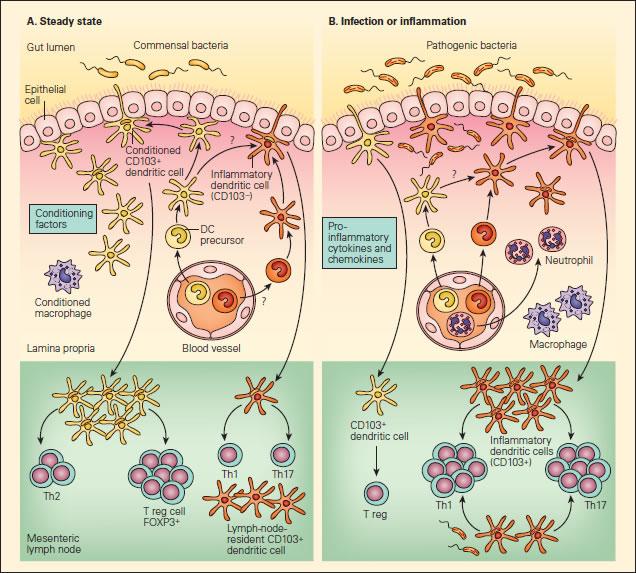
In contrast to the responses seen with commensal bacteria, some pathogenic bacteria possess sufficient virulence factors that allow them to invade the intestinal epithelium and to subvert the immune response and enhance their replication (Figure 15B). This would then result in the activation of the cytosolic- or cell membrane–associated activation of PRRs and the enhanced production of proinflammatory cytokines, e.g. TNF-α, and chemokines that would then promote the recruitment and influx of neutrophils, monocytes/macrophages, and DC precursors derived from the vascular compartment (Figure 15B). These newly arrived DCs have not undergone sampling of the luminal contents with conditioning; this sampling results in the production of Treg cells and IgA-associated immune exclusion, which then induce a cascading set of cellular responses brought about by proinflammatory Th1 and Th17 responses.