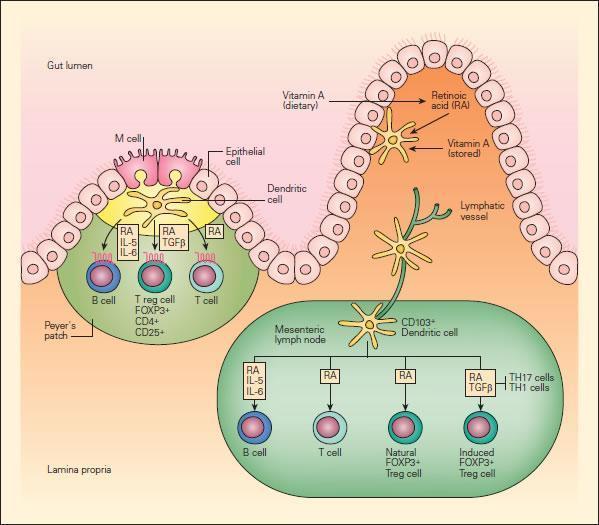
Recently, it has been recognized that vitamin A and its metabolites have potent immunoregulatory activities in the mucosal immune system (Figure 16). Dendritic cells have been shown to produce retinoic acid (RA), which provides yet another type of intestine-specific environmental conditioning agent for activation of T cells and B cells in the gastrointestinal-associated lymphoid tissue (GALT) and associated lymphoid tissues. RA, produced by gut dendritic cells or from dietary sources, not only induces addressin-associated homing receptors on T and B cells, but also provides important signals that induce differentiation and class switching of IgA-producing B cells. Retinoic acid also induces a subset of FOXP3+ Treg, which are important for maintaining immune tolerance in the gut (Chapter 7 in Immunology IV). These findings show that retinoids provide important positive and negative regulatory signals to fine-tune the mucosal immune system and suggest the potential for therapeutic manipulation of the levels of retinoic acid to not only enhance immunoregulatory pathways, but to directly inhibit the generation of inflammatory T cell populations.